Operational
stability
is a leadership
discipline.
Operational stability is a leadership discipline.
FOUNDED BY JAMES REYES-PICKNELL, CO-AUTHOR OF UPTIME
When physical assets underperform, the consequences reach the board: margin erosion, safety and regulatory exposure, reputational damage.
Conscious Asset works with leaders to stabilize, optimize and sustain performance by treating reliability as an executive operating discipline, not a maintenance task.
Margin protection. Risk reduction. Reputation protected. Better operational decisions.
Confidential. Board-ready. No obligation.
21
Years Advising COOs, CFOs & Senior Leadership
Up to $98M+
Documented Cost Avoidance & Margin Protection
Global
Mining · Energy · Utilities · Critical Infrastructure
Work is often confidential. Case examples are anonymized.
Up to $800M
Revenue gains
Trusted by leaders across
Barrick Gold · Agnico Eagle · Cameco · Nutrien · City of Brantford · Ternium · Noria · EY · BCG · Metrolinx · Nova Scotia Power
For COOs, CFOs, and general managers accountable for operational performance and asset risk
Margin protection / cost avoidance
Risk reduced (safety + regulatory)
Faster decision clarity
Reputation protected
Risk reduced (safety + regulatory)
Margin protection / cost avoidance
Faster decision clarity
Reputation protected
THE EXECUTIVE PERSPECTIVE
Asset performance is
a board-level responsibility.
Asset performance is
a board-level responsibility.
Earnings pressure. Regulatory scrutiny. Executive confidence.
The cost of instability is never confined to the plant floor. It surfaces in quarterly results, insurance premiums, regulatory findings, and the credibility of leadership teams. Most organizations still treat reliability as a technical concern — delegated downward and disconnected from strategy.
The consequence is slow, compounding underperformance that erodes margin, trust, and competitive position.
THE METHOD
A disciplined path to stable performance.
Diagnose what’s structural
Separate symptoms from causes. Identify where decision rights, measures, governance, and incentives are driving instability.
Rebuild reliability as management
Elevate reliability from “maintenance activity” to executive operating model — with clear accountability, cadence, and reporting
Sustain performance under pressure
Install a discipline leadership teams can run: fewer emergency decisions, clearer trade-offs, and durable operating stability.
HOW WE HELP
Where Conscious Asset can help
You may know what needs to improve without knowing exactly what kind of support you need. These five areas show where Conscious Asset can help.
Understand What’s Getting in the Way
Find out what is driving the problem, what matters most, and where attention should go first.
Improve Reliability & Maintenance Performance
Strengthen the strategies, work processes, maintenance programs, information, and systems behind reliable operational performance.
Prepare Operations to Perform
Make sure the people, processes, maintenance programs, materials, systems, and information are ready before the operation depends on them.
Understand What’s Getting in the Way
Find out what is driving the problem, what matters most, and where attention should go first.
Improve Reliability & Maintenance Performance
Strengthen the strategies, work processes, maintenance programs, information, and systems behind reliable operational performance.
Prepare Operations to Perform
Make sure the people, processes, maintenance programs, materials, systems, and information are ready before the operation depends on them.
Build Capability & Sustain Improvement
Turn change into practice and build the internal capability and management discipline needed to make improvement last.
Strengthen Management & Decision-Making
Give leaders a clearer connection between operational reality, information, accountability, risk, and business decisions.
Engagements are designed for senior leadership teams — not delegated improvement projects.
THE FOUNDER
Built to scale beyond one person.
Grounded in proven work.
Conscious Asset is the company. James Reyes-Picknell is its founder and authority foundation.
Conscious Asset is a methodology-led advisory built around operating discipline, evidence, and executive decision clarity. Its work draws on James Reyes-Picknell’s decades of experience and authorship of Uptime and Steadfast, translating proven reliability thinking into board-level action. The company is designed to extend across industries and future contributors without diluting the standard of the work.
Would you rather have the original source — or someone quoting him?
THE PROOF
A reference point, not a résumé.
“I’m not doing this unless you’re working on this with me.”
Former CEO client (anonymized)
Some leaders bring Conscious Asset from one organization to the next.
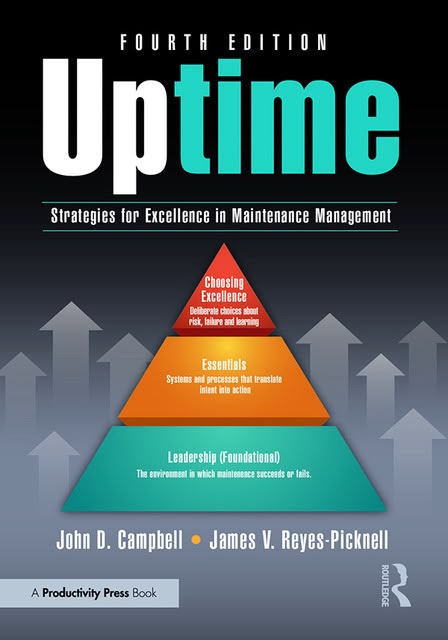
Uptime (3rd edition)
A foundational reliability text used across industries.
Leaders engage Conscious Asset for direct, accountable application to operations, not theory. The question is simple: would you rather work with the original source, or someone quoting him?
-
Board confidence restored after systemic reliability failures
-
Margin protection through disciplined operating model redesign
-
Risk exposure reduced by addressing structural causes, not symptoms
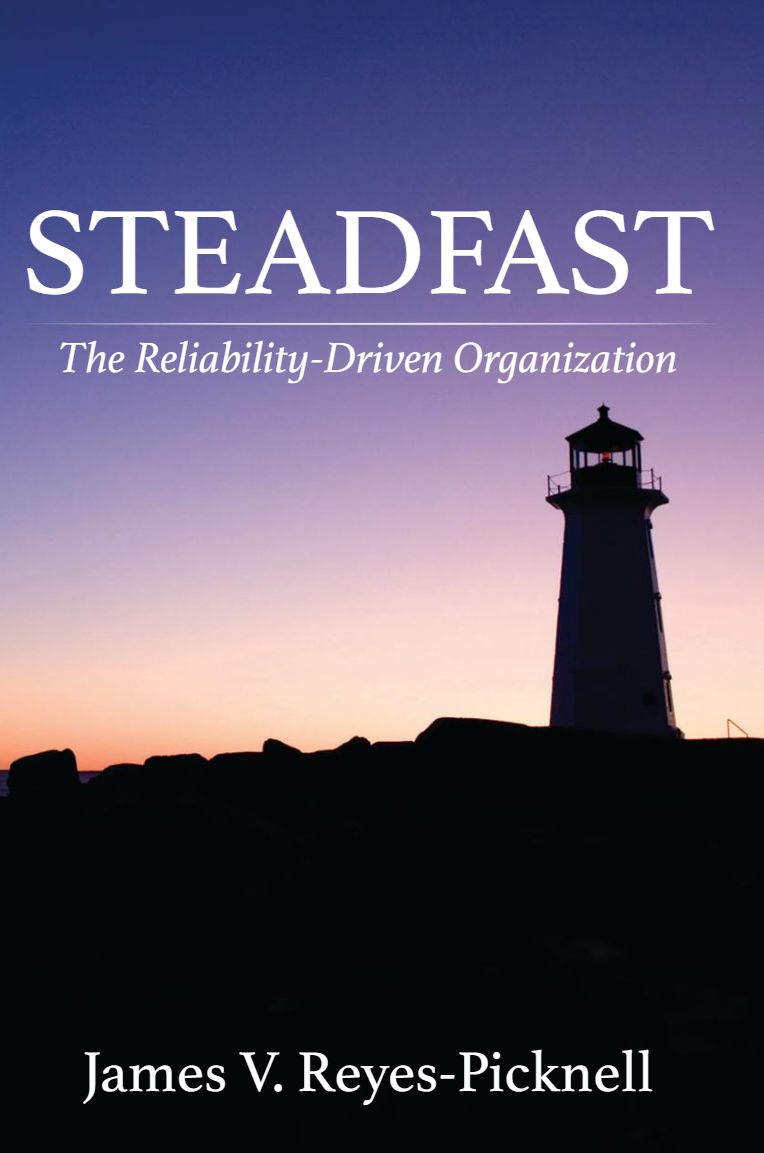
Steadfast
A clear executive roadmap for turning reliability into strategic advantage.
For leaders facing aging infrastructure, rising demand, workforce constraints, and digital transformation pressure, Steadfast connects leadership, culture, systems, and reliability practice into a practical operating framework.
- Reliability aligned with business strategy
- Reactive work shifted into disciplined, resilient operations
- Risk reduced through stronger leadership, systems, and decision cadence
EXECUTIVE BRIEFS
Briefings for leaders who govern performance.
Board-level notes on reliability, risk, cost, resilience, and disciplined operating performance.
Questions Leaders Ask
A few points of clarity.
Conscious Asset is a methodology-led advisory built around operating discipline, evidence, and executive decision clarity. It draws on the foundational work that shaped modern reliability strategy — and translates it into board-level action. Jim Reyes-Picknell’s authorship of Uptime establishes proof-of-origin: the source behind frameworks others cite. The company is the system — designed to extend across industries and future contributors without diluting standards.
What is Conscious Asset?
Conscious Asset helps executive teams improve reliability, reduce operating costs, strengthen operational resilience, and make better asset investment decisions. We do this work through a proven management methodology developed from nearly five decades of work with asset-intensive organizations.
Who is Conscious Asset for?
Conscious Asset is for COOs, CFOs, general managers, asset-intensive organizations, and senior leaders accountable for operational performance, risk, cost, and resilience. Executives are accountable for business performance. Reliable assets make reliable businesses.
What problems does Conscious Asset help address?
Conscious Asset helps organizations address recurring instability, unplanned downtime, high maintenance costs, poor capital utilization, operational risk, asset risk, unclear accountability, weak reporting, and reliability issues that have become leadership concerns rather than isolated technical problems.
How is Conscious Asset different from traditional maintenance consulting?
Traditional maintenance consulting often focuses on technical fixes, tools, or improvement programs. Conscious Asset focuses on the leadership discipline, governance, decision structure, and operating cadence needed to sustain performance under pressure.
What services does Conscious Asset provide?
We help organizations improve operational performance through executive advisory, operational readiness, reliability improvement, maintenance management, asset management, supply chain optimization, data analytics, leadership coaching, training, and strategic assessments. Engagements range from executive workshops to multi-year transformation programs.
How does an engagement usually begin?
Most engagements begin with a confidential executive discussion about your business objectives, current challenges, and where the greatest opportunity for improvement lies.
How quickly can we see results?
Most organizations begin identifying significant opportunities within the first few weeks of an assessment. Early improvements often include clearer priorities, better decision-making, reduced maintenance costs, improved spare parts management, and greater operational stability.
However, lasting transformation takes longer. Organizational maturity cannot be rushed. While early wins can often be achieved within weeks, moving from a reactive, firefighting culture to a disciplined, reliability-driven organization is typically a journey of 18 to 24 months. The objective is not simply to solve today's problems but to build the capability to prevent tomorrow's.
THE INVITATION
Begin a strategic conversation.
If you carry responsibility for operational performance, asset risk, or organizational reliability — this confidential conversation is the right place to start.
Send a confidential note
We reply personally. If there's a fit, the next step is a short confidential call.
What happens next
1
2
3
We review your note
We look for the decision context, constraints, and risk exposure.
A brief confidential call
To clarify scope, stakes, and what "good" looks like.
A clear recommendation
Proceed, pause, or redirect. No obligation.
What happens next
1
We review your note
We look for the decision context, constraints, and risk exposure.
2
A brief confidential call
To clarify scope, stakes, and what "good" looks like.
3
A clear recommendation
Proceed, pause, or redirect. No obligation.
All inquiries are treated as confidential.